Mortgage Rates Germany Current: Your Ultimate Guide

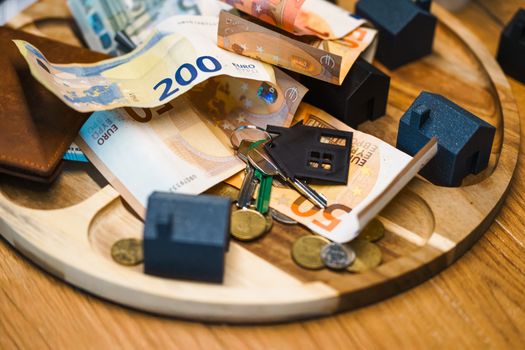
Euro currency, keys, and miniature houses symbolize real estate and finance concepts.Photo: Jakub Zerdzicki / Pexels

Mortgage Rates Germany Current: Your Ultimate Guide

Navigate the German mortgage market with confidence, understanding current trends and securing the best financing for your home.

Find Your Best Rate

Key Takeaways

  • ✓ German mortgage rates are influenced by ECB policy, bond yields, and lender competition.
  • ✓ Fixed-rate mortgages are dominant in Germany, offering long-term payment predictability.
  • ✓ The 10-year fixed rate is a common benchmark for current German mortgage offers.
  • ✓ Your creditworthiness (Schufa score) significantly impacts the rate you're offered.

How It Works

1
Understand the Market

Research the general trend of 'mortgage rates Germany current' to gauge the economic climate. This initial understanding helps set realistic expectations for your borrowing costs.

2
Assess Your Finances

Calculate your available equity, monthly income, and existing debts to determine your borrowing capacity. Lenders will scrutinize these figures to assess your repayment ability.

3
Gather Documents

Prepare all necessary paperwork, including income statements, bank statements, and property details. A complete application package streamlines the approval process and demonstrates your readiness.

4
Compare Offers

Obtain multiple quotes from various German lenders and mortgage brokers. Don't just look at the headline interest rate; compare the total cost, terms, and conditions.

Understanding Current Mortgage Rates in Germany

A detailed view of a 2002 Euro coin featuring the Brandenburg Gate, emphasizing currency and design.Photo: Chrishan Sakthisivantha / Pexels
The landscape of 'mortgage rates Germany current' is dynamic, shaped by a confluence of global economic forces and specific domestic factors. For anyone considering purchasing property in Germany, whether a first-time buyer or an experienced investor, a clear grasp of these influences is paramount. At its core, the European Central Bank (ECB) plays a pivotal role. Its monetary policy decisions, particularly regarding interest rates, ripple through the entire Eurozone banking system, directly impacting the cost at which commercial banks can borrow money. When the ECB raises its key interest rates, banks' funding costs increase, which is then typically passed on to consumers in the form of higher mortgage rates. Conversely, a dovish stance from the ECB, perhaps to stimulate economic growth, can lead to lower borrowing costs. Beyond the ECB, the yield on German government bonds, particularly the Bund (the German federal bond), serves as a crucial benchmark. Long-term mortgage rates are often closely correlated with the yield on 10-year Bunds. This is because banks often use these long-term bonds as a hedge against their own long-term lending risks. If Bund yields rise, mortgage rates usually follow suit, reflecting a higher perceived risk or opportunity cost for lenders. Geopolitical events, inflation expectations, and general economic sentiment also contribute to these movements. For instance, periods of high inflation often prompt central banks to increase rates to cool down the economy, directly affecting 'mortgage rates Germany current'. Another significant factor is the level of competition among German banks. Germany has a highly fragmented banking sector, with a mix of large commercial banks, regional Landesbanken, Sparkassen (savings banks), and cooperative banks. This competitive environment can sometimes lead to more favorable rates for borrowers, as institutions vie for market share. However, banks also assess individual borrower risk, meaning that your personal financial situation – including your credit score (Schufa), income stability, and the amount of equity you contribute – will heavily influence the specific rate you are offered. It's not just about the market average; it's about your personal risk profile in the eyes of the lender. Understanding these layers of influence is the first step in navigating the German mortgage market effectively and securing the most advantageous terms for your property financing. For more general insights into the German financial landscape, explore our guide on German financial institutions.

Fixed vs. Variable: Navigating Your Mortgage Options

When evaluating 'mortgage rates Germany current', one of the most critical decisions you'll face is choosing between a fixed-rate and a variable-rate mortgage. Each option comes with its own set of advantages and disadvantages, and the best choice depends heavily on your personal financial situation, risk tolerance, and your outlook on future interest rate movements. In Germany, fixed-rate mortgages are overwhelmingly popular, with the vast majority of borrowers opting for this structure. This preference stems from the desire for predictability and security. A fixed-rate mortgage locks in your interest rate for a specified period, typically 5, 10, 15, or even 20 years. This means your monthly repayments remain constant throughout this term, providing peace of mind and making long-term financial planning much simpler. You are protected from potential interest rate hikes, which can be a significant advantage in an environment where rates are expected to rise. However, the trade-off for this security is that fixed rates are generally slightly higher than initial variable rates, and you won't benefit if market rates fall during your fixed term. Variable-rate mortgages, also known as floating-rate mortgages (variable Zinssatz), are less common but can be attractive in specific circumstances. With a variable rate, your interest payments fluctuate in line with a benchmark interest rate, often the ECB's main refinancing rate or the Euribor. This means your monthly payments can go up or down, offering flexibility if rates decrease. If you anticipate rates falling, or if you plan to sell your property or pay off your mortgage relatively quickly, a variable rate might seem appealing. The initial rates for variable mortgages are often lower than fixed rates, which can reduce your early repayment burden. However, the significant risk lies in the uncertainty: if interest rates rise unexpectedly, your monthly payments could increase substantially, potentially straining your budget. This unpredictability makes variable rates a higher-risk option, suitable primarily for those with a strong financial buffer and a high tolerance for risk. Many German lenders also offer a hybrid approach, such as a fixed rate for an initial period followed by a variable rate, or the option to switch to a fixed rate at certain points. Understanding the nuances of each option and how they interact with the current market conditions for 'mortgage rates Germany current' is crucial. It's highly recommended to consult with a financial advisor to assess which structure best aligns with your financial goals and risk appetite, considering both the present market and potential future economic shifts.

Factors Influencing Your Individual German Mortgage Rate

While general 'mortgage rates Germany current' provide a market benchmark, the actual interest rate you secure for your home loan will be highly individualized. Several key factors contribute to how lenders assess your specific risk profile and, consequently, the rate they offer. The most significant of these is your creditworthiness, primarily assessed through your Schufa score. Schufa Holding AG is Germany's largest credit bureau, and its score reflects your financial reliability based on past payment behavior, existing debts, and other financial commitments. A high Schufa score (indicating low risk) will invariably lead to more favorable interest rates, as lenders perceive you as a reliable borrower. Conversely, a low score or negative entries can result in higher rates or even a rejection of your application. Another critical factor is the loan-to-value (LTV) ratio, which expresses the amount you are borrowing relative to the property's appraised value. For example, if a property is valued at €300,000 and you borrow €240,000, your LTV is 80%. Generally, the lower your LTV (i.e., the more equity you contribute), the lower the interest rate you'll be offered. Lenders view a larger down payment as a sign of financial strength and a reduced risk for them, as there is a larger buffer against potential property value declines. Aiming for an LTV of 80% or lower is often beneficial for securing competitive rates. Additionally, the repayment period (Laufzeit) also impacts your rate. Longer repayment periods typically come with slightly higher interest rates, as lenders face a longer period of interest rate risk and uncertainty. Shorter terms, while resulting in higher monthly payments, can often secure a lower overall interest rate. Your income stability and employment status are also heavily scrutinized. Lenders prefer borrowers with stable, long-term employment and a consistent income stream, ideally from a permanent contract (unbefristeter Arbeitsvertrag). Self-employed individuals or those with volatile incomes might face stricter requirements or slightly higher rates due to the perceived higher risk. The type of property you are purchasing can also play a minor role. Certain properties, such as new builds with energy-efficient ratings, might qualify for special government-backed loans with potentially lower rates, like those offered by KfW. Understanding and optimizing these personal factors is as important as monitoring the overall 'mortgage rates Germany current' when aiming for the best possible financing terms. For further insights into personal finance management in Germany, consider exploring resources on personal financial planning.

Tips for Securing the Best Mortgage Rates Germany Current

Navigating the German mortgage market to secure the most favorable 'mortgage rates Germany current' can feel daunting, but with a strategic approach, you can significantly improve your chances. Here are some actionable tips: * **Improve Your Schufa Score:** Before even applying for a mortgage, obtain a copy of your Schufa report (Schufa-Auskunft). Review it for any errors and address them. Pay all bills on time, avoid opening too many credit lines simultaneously, and reduce existing debts. A strong credit history is your biggest asset for lower rates. * **Maximize Your Down Payment:** Aim for the highest possible down payment. As discussed, a lower Loan-to-Value (LTV) ratio directly translates to reduced risk for lenders and thus, better interest rates. Ideally, aim for at least 20-30% of the property purchase price, plus an additional 10-15% to cover ancillary costs like property transfer tax (Grunderwerbsteuer), notary fees, and real estate agent commissions. * **Compare Multiple Lenders:** Do not settle for the first offer you receive. Approach several banks (e.g., Sparkassen, Volksbanken, private banks) and utilize independent mortgage brokers (Baufinanzierungsberater). Brokers often have access to a wider range of lenders and can negotiate on your behalf to find the best rates tailored to your profile. The difference between the best and worst offer can be substantial over the lifetime of a loan. * **Consider a Longer Fixed-Rate Period:** While shorter fixed rates might appear lower initially, opting for a 10, 15, or even 20-year fixed rate provides long-term security against rising interest rates. This predictability can be invaluable for budgeting and peace of mind, especially in volatile economic climates. * **Be Prepared with Documentation:** Have all necessary documents ready and organized. This includes proof of income (pay slips, tax returns), bank statements, identification, and details about the property. A complete and well-presented application demonstrates professionalism and can speed up the approval process. * **Negotiate the 'Bereitstellungszinsen':** If your property purchase involves a new build or a renovation that will take time, be aware of 'Bereitstellungszinsen' (commitment fees). These are fees charged by the bank on the unconverted loan amount if you don't fully draw down the loan within a specified free period (usually 3-12 months). Negotiate for a longer free period or lower fees, as these can add significant costs. * **Factor in Ancillary Costs:** Remember that the interest rate is not the only cost. Account for property transfer tax (typically 3.5% to 6.5% depending on the federal state), notary and land registry fees (approx. 1.5-2%), and potentially real estate agent fees (up to 7.14%). These costs are usually paid out of pocket and are not financed by the mortgage. By diligently following these tips, you can empower yourself to navigate the current German mortgage market effectively and secure a mortgage rate that aligns with your financial goals and capabilities.

Comparison

FeatureFixed-Rate MortgageVariable-Rate MortgageKfW Loan (example)
Interest Rate Stability✓ (Locked in)✗ (Fluctuates)✓ (Often fixed for initial period)
Monthly Payment Predictability
Benefit from Falling Rates✗ (Unless variable after fixed term)
Risk of Rising Rates
Typical Term Length5-20+ yearsShort-term / FlexibleLonger terms available
ComplexityMediumMediumHigher (specific eligibility)
Best ForSecurity, long-term planningShort-term, risk-tolerantEnergy efficiency, specific projects

What Our Readers Say

5 ★★★★★

"Understanding the mortgage rates Germany current market seemed overwhelming at first. This guide broke down the influences perfectly and helped me secure a fantastic 10-year fixed rate. Highly recommended!"

5 ★★★★★

"I was looking for an overview of German home loan interest and this article delivered. The tips on improving my Schufa score proved invaluable, leading to a much better offer than I initially expected."

5 ★★★★★

"Thanks to the detailed breakdown of fixed vs. variable rates, I felt confident choosing a 15-year fixed mortgage. My monthly payments are predictable, and I saved thousands by comparing offers effectively."

4 ★★★★☆

"While the article was incredibly thorough on mortgage rates Germany current, I wish there was a bit more on specific regional differences in ancillary costs. Still, a very strong resource for anyone buying property."

5 ★★★★★

"As an expat, navigating the German mortgage market was daunting. This guide clarified everything from ECB influence to personal creditworthiness, making my home-buying journey much smoother."

Frequently Asked Questions

What are the primary factors influencing mortgage rates Germany current?
The primary factors influencing current mortgage rates in Germany include the European Central Bank's monetary policy, the yield on German government bonds (Bunds), inflation expectations, and the competitive landscape among German lenders. Your individual creditworthiness and loan-to-value ratio also play a significant role in the specific rate you receive.
Is it better to choose a fixed-rate or variable-rate mortgage in Germany?
In Germany, fixed-rate mortgages are generally preferred for their payment predictability and security against rising interest rates. Variable rates offer flexibility and can be cheaper if rates fall, but carry the risk of increased payments if rates rise. The best choice depends on your risk tolerance and financial outlook.
How can I improve my chances of getting a lower mortgage rate in Germany?
To improve your chances of securing a lower mortgage rate, focus on maintaining a high Schufa credit score, making a substantial down payment to reduce your loan-to-value ratio, and comparing offers from multiple lenders and mortgage brokers. Stable employment and a consistent income also significantly help.
What additional costs should I budget for when taking out a mortgage in Germany?
Beyond the principal and interest, you must budget for significant ancillary costs. These include property transfer tax (Grunderwerbsteuer, 3.5-6.5% of purchase price), notary and land registry fees (approx. 1.5-2%), and potentially real estate agent commissions (up to 7.14%). These costs are usually paid out-of-pocket.
Do 'mortgage rates Germany current' differ based on the region or city?
While the underlying market interest rates for 'mortgage rates Germany current' are generally uniform across the country, local factors can influence the final offer. Property values, local lender competition, and regional economic conditions can lead to slight variations. However, the most significant differences often come from individual borrower profiles.
Who should consider getting a mortgage in Germany?
Anyone looking to purchase residential or commercial property in Germany, whether they are German citizens, EU citizens, or non-EU residents with a stable income and a valid residence permit, should consider getting a mortgage. It's particularly beneficial for those seeking long-term stability or investment opportunities.
What are the risks associated with German mortgage rates?
The primary risks include interest rate fluctuations (especially with variable-rate mortgages), potential changes in personal financial circumstances affecting repayment ability, and property value depreciation. For fixed-rate mortgages, the risk is being locked into a higher rate if market rates drop significantly.
What are the future trends for mortgage rates Germany current?
Future trends for 'mortgage rates Germany current' are heavily tied to the ECB's inflation targets and economic growth projections. While predicting exact movements is impossible, experts generally watch for signals regarding future rate hikes or cuts, bond market stability, and geopolitical developments that could influence long-term rate outlooks.

Stay informed about 'mortgage rates Germany current' and make empowered decisions for your home financing journey. Explore our resources, compare offers, and take the first step towards owning your dream property in Germany with confidence.

Topics: mortgage rates germany currentGerman home loan interestmortgage market Germanyfixed-rate mortgage Germanyvariable-rate mortgage Germany