How to Invest in Stocks Germany: Your Ultimate Guide
August 16, 2026 14 min read 2,857 words
Navigate the German stock market with confidence and build a robust investment portfolio for your financial future.
Start Investing Today
Understanding the German Investment Landscape
 Photo: Rafael Minguet Delgado / Pexels
Investing in stocks in Germany presents a unique set of opportunities and considerations. The German market, anchored by the Deutsche Börse and its primary exchange, the Frankfurt Stock Exchange (FSE), is one of the largest and most liquid in Europe. It's home to some of the world's leading companies, particularly in sectors like automotive, chemicals, engineering, and pharmaceuticals. For anyone looking to invest in stocks Germany, understanding this landscape is the foundational step. The DAX 40, Germany's blue-chip stock market index, represents the performance of the 40 largest and most liquid companies traded on the FSE. These companies are often global leaders, offering a degree of stability and international exposure. Beyond the DAX, there are other indices like the MDAX (mid-cap companies) and TecDAX (technology companies), providing a broader range of investment choices.
German investors, both domestic and international, benefit from a robust regulatory framework overseen by the Bundesanstalt für Finanzdienstleistungsaufsicht (BaFin), the Federal Financial Supervisory Authority. BaFin ensures market integrity, investor protection, and financial stability. This regulatory oversight instills confidence, making the German market an attractive destination for capital. Furthermore, Germany's strong economy, characterized by its export-driven model and skilled workforce, provides a solid backdrop for corporate growth and, consequently, stock performance. However, like any market, it's subject to global economic shifts, political developments, and company-specific risks.
Before diving into specific investment vehicles, it's crucial to grasp the cultural and practical aspects of investing in Germany. While traditionally more conservative, German attitudes towards stock market investing have evolved, with a growing number of individuals recognizing the importance of long-term wealth accumulation through equities. This shift is partly driven by low-interest rates on traditional savings accounts, which diminish purchasing power over time due to inflation. Therefore, understanding the options available, from direct stock purchases to diversified funds, becomes paramount. The availability of numerous online brokers, both domestic and international, has also democratized access to the German stock market, making it easier than ever for individuals to start their investment journey.
Exploring various investment strategies is a key component of this initial understanding, ensuring you align your approach with your financial goals and risk tolerance.
One significant aspect to consider for investors in Germany is the tax implications, specifically the Abgeltungsteuer (flat tax on capital gains). This tax applies to investment income, including dividends and capital gains from stock sales. We will delve deeper into this later, but it's important to acknowledge from the outset that tax planning is an integral part of investing in Germany. Understanding how taxes affect your returns can significantly influence your overall investment strategy and the choice of investment products. For instance, certain investment vehicles might offer tax advantages or deferrals, which could be beneficial for long-term investors. Moreover, knowing the processes for tax declarations and potential exemptions is vital for compliance and maximizing net returns. The German financial ecosystem is designed to be transparent, but navigating its specifics requires careful attention and, often, professional advice.
Choosing Your Investment Vehicle and Platform
 Photo: AlphaTradeZone / Pexels
Once you have a grasp of the German market, the next critical step for how to invest in stocks Germany is deciding on your investment vehicle and the platform through which you'll execute your trades. The primary options typically include individual stocks, Exchange Traded Funds (ETFs), and mutual funds. Each has its own risk-reward profile and suitability for different investor types. Individual stocks offer direct ownership in a company, providing the potential for high returns if the company performs well, but also carrying higher risk due to lack of diversification. Researching companies, understanding their business models, financial health, and growth prospects is essential for this approach. For German companies, this often means looking at financial reports, analyst ratings, and macroeconomic factors influencing their specific industry.
ETFs are a popular choice, particularly for beginners or those seeking diversification without the complexity of managing a portfolio of individual stocks. An ETF is a type of investment fund traded on stock exchanges, much like a stock. It typically holds assets like stocks, commodities, or bonds, and trades close to its net asset value over the course of the trading day. In Germany, ETFs tracking indices like the DAX 40, MDAX, or even broader European or global indices are widely available. They offer instant diversification, lower fees compared to actively managed mutual funds, and flexibility. Many German investors use ETFs as the core of their long-term portfolios. Mutual funds, while offering professional management and diversification, often come with higher fees and may not always outperform their respective benchmarks after costs.
Selecting the right investment platform or broker is equally important. In Germany, you have several excellent options, ranging from traditional banks to specialized online brokers. Traditional banks like Deutsche Bank, Commerzbank, or Sparkassen offer investment services, but often with higher fees and less user-friendly online interfaces compared to dedicated online brokers. Online brokers such as Comdirect, Consorsbank, ING, and Scalable Capital (a robo-advisor offering) are highly popular. They typically offer lower trading fees, a wider selection of ETFs and stocks, and advanced trading tools. Some, like Trade Republic or Scalable Capital, have popularized commission-free trading models for certain assets, though it's crucial to understand their specific fee structures and potential hidden costs.
When choosing a broker, consider the following factors: trading fees (per trade, monthly fees, custody fees), available assets (German stocks, international stocks, ETFs, bonds), customer service quality, regulatory compliance (BaFin regulation is a must), user-friendliness of the platform, and tools for analysis and reporting. For long-term investors, brokers offering Sparpläne (savings plans) for ETFs or individual stocks are particularly attractive. These allow you to invest a fixed amount regularly, benefiting from the cost-average effect. This systematic approach simplifies investing and helps build wealth steadily over time, making it an excellent strategy for those new to the German stock market or seeking a disciplined investment method.
Navigating Taxes and Building a Diversified Portfolio
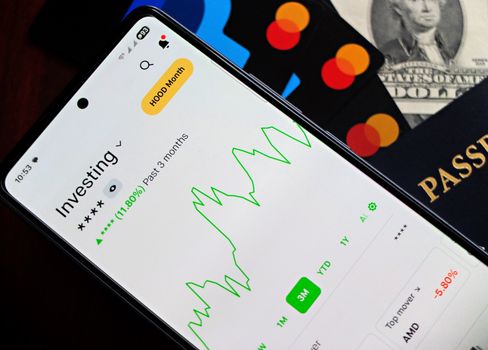 Photo: DΛVΞ GΛRCIΛ / Pexels
A crucial aspect of how to invest in stocks Germany is understanding the tax implications. In Germany, investment income, including capital gains from selling stocks and dividends received, is subject to the Abgeltungsteuer (flat tax on capital gains). This tax is generally 25%, plus a solidarity surcharge (Solidaritätszuschlag) of 5.5% of the tax amount, and potentially church tax (Kirchensteuer) if applicable. This effectively brings the total tax rate to around 26.375% (without church tax) or higher. For most investors, this tax is directly withheld by your German broker and automatically transferred to the tax authorities, simplifying the process. However, there's an annual tax-free allowance called the Sparer-Pauschbetrag, which is currently €1,000 for single individuals and €2,000 for married couples filing jointly. You can instruct your broker to apply this allowance (Freistellungsauftrag) to avoid immediate tax deductions up to this limit. Any gains above this allowance will be taxed. Understanding this allowance and utilizing it efficiently is vital for optimizing your net returns.
Beyond taxes, building a diversified portfolio is paramount for managing risk and achieving long-term financial goals. Diversification means spreading your investments across various asset classes, industries, and geographies to mitigate the impact of poor performance in any single area. For those looking to invest in stocks Germany, this could mean not only investing in German blue-chip companies but also including small and mid-cap German companies, international stocks (e.g., US, Asian markets), and different sectors. ETFs are an excellent tool for achieving broad diversification, as a single ETF can provide exposure to hundreds or thousands of underlying securities. For instance, a global equity ETF can give you exposure to markets worldwide, while a DAX ETF focuses specifically on the German large-cap market.
Consider asset allocation based on your risk tolerance and investment horizon. Younger investors with a longer time horizon might opt for a higher allocation to equities, while those closer to retirement might prefer a more conservative portfolio with a larger portion in bonds or less volatile assets. It's not just about what you invest in, but also how much of each. Regular rebalancing of your portfolio is also a good practice. This involves periodically adjusting your asset allocation back to your target percentages. For example, if stocks have performed exceptionally well and now represent a larger portion of your portfolio than intended, you might sell some stock to buy bonds, or vice versa. This systematic approach helps maintain your desired risk level and can even lead to buying low and selling high over time.
Learn more about robust portfolio construction strategies to further enhance your investment journey.
Finally, don't underestimate the power of long-term investing and compound interest. The German stock market has historically shown resilience and growth over extended periods. By consistently investing over many years, allowing your earnings to generate further earnings, you can significantly grow your wealth. Patience and discipline are key. Avoid the temptation to react to short-term market fluctuations and stick to your well-researched investment strategy. Regular contributions, even small ones, combined with a diversified portfolio and an understanding of the tax framework, lay a strong foundation for successful long-term investing in Germany.
Common Mistakes to Avoid and Smart Tips for German Investors
 Photo: Leeloo The First / Pexels
When you invest in stocks Germany, several common pitfalls can derail your progress. Being aware of these mistakes and actively working to avoid them can significantly improve your chances of success. One of the most prevalent errors is a lack of diversification. Putting all your capital into one or two stocks, even if they are 'hot,' exposes you to immense risk. If those companies underperform, your entire portfolio suffers. Diversify across sectors, geographies, and asset classes to cushion against individual stock volatility. Another frequent mistake is emotional investing. Reacting to market news with fear or greed often leads to buying high and selling low. Stick to your pre-defined investment strategy and avoid impulsive decisions based on short-term market noise. The news cycle is designed to be attention-grabbing, but often provides little actionable insight for long-term investors.
Ignoring fees and taxes is another costly oversight. High trading fees, custody fees, or expense ratios for funds can eat into your returns over time. Always compare broker fees and understand the total cost of ownership for any investment product. Similarly, as discussed, understanding the Abgeltungsteuer and utilizing your Sparer-Pauschbetrag is crucial for tax efficiency. Many new investors also make the mistake of not having a clear investment plan. Without defined goals, a risk tolerance assessment, and an investment horizon, your investing will be haphazard. A clear plan acts as a roadmap, guiding your decisions and keeping you focused.
Here are some smart tips to enhance your investing journey in Germany:
* **Start Early and Consistently:** Time in the market often beats timing the market. The power of compounding works best over long periods. Set up regular savings plans (Sparpläne) to automate your investments.
* **Educate Yourself Continuously:** The financial world is dynamic. Stay informed about market trends, economic indicators, and new investment products. Read financial news, books, and reputable blogs.
* **Understand Your Risk Tolerance:** Be honest about how much risk you're comfortable with. Don't take on more risk than you can emotionally handle, as this often leads to poor decisions during market downturns.
* **Utilize ETFs for Core Holdings:** For broad market exposure and diversification, ETFs are an excellent, low-cost option. They simplify portfolio management significantly.
* **Don't Forget the Sparer-Pauschbetrag:** Actively manage your Freistellungsauftrag with your brokers to make the most of your tax-free allowance.
* **Consider Robo-Advisors:** If you prefer a hands-off approach, robo-advisors like Scalable Capital or Quirion can automatically manage a diversified portfolio for you based on your risk profile.
* **Review and Rebalance Periodically:** At least once a year, review your portfolio's performance and rebalance it to ensure it still aligns with your original asset allocation and goals. This helps in maintaining risk levels and taking profits from overperforming assets.
* **Seek Professional Advice When Needed:** If you feel overwhelmed or have complex financial situations, consult with a qualified financial advisor in Germany. They can provide tailored advice and help you navigate the intricacies of the German financial system.