Unlocking Opportunities: The German Stock Market Index DAX 30
german stock market index dax 30

Unlocking Opportunities: The German Stock Market Index DAX 30

Explore the premier benchmark of Germany's economy and discover how to strategically engage with its top-tier companies.

Start Your DAX Journey

Key Takeaways

  • ✓ The DAX 30 represents 30 of the largest and most liquid German companies traded on the Frankfurt Stock Exchange.
  • ✓ It is a performance index, meaning it accounts for dividends reinvested, giving a truer picture of total return.
  • ✓ The DAX 30 is calculated by Deutsche Börse and is widely considered a barometer for the German economy.
  • ✓ Companies are selected based on market capitalization and order book turnover, reviewed quarterly.

How It Works

1
Understand Index Composition

Learn which companies make up the DAX 30 and the criteria for their inclusion. This knowledge is crucial for understanding the index's sector exposure and overall market representation.

2
Analyze Performance Drivers

Investigate the economic factors, global events, and company-specific news that influence the DAX 30's movements. This helps in predicting potential trends and understanding market volatility.

3
Choose Investment Vehicles

Decide on the best way to invest in the DAX 30, whether through ETFs, individual stocks, or derivatives. Each option carries different risk profiles and accessibility for investors.

4
Monitor and Adjust Strategy

Continuously track the DAX 30's performance and review your investment strategy based on market changes and personal financial goals. Regular adjustments are key to long-term success.

Understanding the German Stock Market Index DAX 30: A Comprehensive Overview

A towering skyscraper in the heart of Frankfurt's financial district against a clear blue sky. Photo: Christina & Peter / Pexels
The German stock market index DAX 30 stands as the quintessential benchmark for the German equity market, representing the performance of the 30 largest and most liquid companies listed on the Frankfurt Stock Exchange (FSE). For investors and financial analysts worldwide, the DAX 30 is more than just a number; it's a critical indicator of the health and direction of the German economy, Europe's largest. Its origins trace back to July 1, 1988, when it was first launched with a base value of 1,000 points. Over the decades, it has evolved into one of the most closely watched indices globally, reflecting the prowess of Germany's industrial giants, technological innovators, and consumer powerhouses. Unlike many other major global indices, the DAX 30 is a performance index. This crucial distinction means that it not only tracks the price movements of its constituent stocks but also accounts for the reinvestment of dividends. This methodology provides a more accurate and comprehensive picture of the total return an investor would receive if they held the underlying stocks and reinvested all their payouts. This makes the DAX 30 particularly attractive for long-term investors seeking to understand the true growth potential and income generation of the German market. The index is managed by Deutsche Börse AG, the operator of the Frankfurt Stock Exchange, which meticulously oversees its composition and calculation. Companies are selected based on a strict set of criteria, primarily focusing on market capitalization and order book turnover, ensuring that only the most influential and actively traded firms are included. Regular reviews, typically quarterly, ensure that the index remains representative of the dynamic German corporate landscape. This periodic adjustment allows the DAX 30 to adapt to economic shifts and corporate growth, reflecting the current leaders in various sectors. From automotive giants like Volkswagen and Mercedes-Benz to chemical behemoths like BASF and software powerhouses such as SAP, the DAX 30 offers a diversified exposure to the backbone of the German economy. Understanding its structure and calculation methodology is the first step towards effectively leveraging this powerful financial instrument for investment purposes. An in-depth look at global stock market trends reveals the interconnectedness of indices like the DAX 30 with broader economic forces.

Navigating the Components and Sectoral Representation of the DAX 30

Aerial view of Frankfurt's modern skyline with skyscrapers and urban landscape. Photo: Jakob Schlothane / Pexels
The strength of the German stock market index DAX 30 lies not just in its methodology but also in the caliber and diversity of its constituent companies. While the name 'DAX 30' implies a fixed number, it's important to note that the index underwent a significant expansion in September 2021, becoming the DAX 40. However, for historical context and many existing investment products, the 'DAX 30' designation remains a widely recognized term, representing the core essence of Germany's leading companies. These companies are drawn from a broad spectrum of industries, providing investors with a diversified exposure to key sectors driving the German and European economies. Automotive, chemicals, pharmaceuticals, finance, technology, and industrials are typically well-represented, reflecting Germany's traditional strengths and emerging innovations. For instance, the automotive sector often features prominently with global players like Volkswagen, BMW, and Mercedes-Benz Group (formerly Daimler), whose performance is intricately linked to global consumer spending, technological advancements in electric vehicles, and international trade policies. The chemical industry, with companies such as BASF and Linde (which is also a global leader in industrial gases), demonstrates Germany's foundational strength in manufacturing and advanced materials. Pharmaceuticals and healthcare are represented by giants like Bayer and Merck KGaA, contributing to global health solutions and benefiting from demographic trends. Financial services, with Deutsche Bank and Commerzbank, provide insight into the European banking landscape and economic stability. Furthermore, technology companies like SAP, a world leader in enterprise software, highlight Germany's capacity for innovation and digital transformation. This sectoral breadth reduces the risk associated with over-reliance on a single industry, making the DAX an appealing option for diversified portfolio construction. The selection criteria for these companies are rigorous, focusing on free float market capitalization and liquidity, measured by order book turnover. This ensures that the index reflects the largest and most actively traded companies, providing an accurate and dynamic representation of the German market. The regular reviews by Deutsche Börse (quarterly for fast entry/exit and annually for regular adjustments) allow for new, rapidly growing companies to enter the index while underperforming ones may be removed. This dynamic composition ensures that the DAX remains relevant and continues to be a true barometer of Germany's corporate elite. Understanding these components is vital for investors looking to gauge the macroeconomic outlook for Germany and Europe, as the fortunes of these companies often mirror broader economic trends and global market sentiment. Analyzing the individual contributions of these firms can also provide insights into specific industry performance and potential investment opportunities within Germany's robust economy.

Investment Strategies and Performance Analysis for the DAX 30
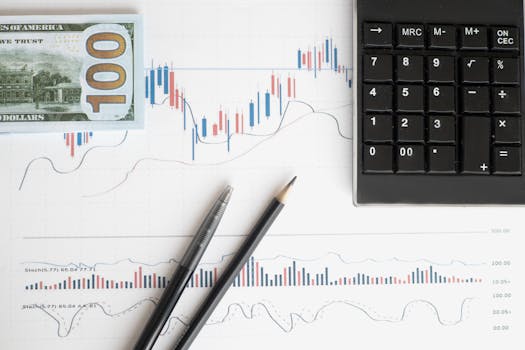
Stock analysis workspace featuring charts, a calculator, and currency for data-driven insights. Photo: Hanna Pad / Pexels
Investing in the German stock market index DAX 30 offers a multitude of strategies, catering to various investor profiles and risk tolerances. Given its status as a performance index, tracking the reinvestment of dividends, the DAX presents a compelling case for long-term growth-oriented portfolios. One of the most common and accessible ways to gain exposure to the DAX is through Exchange Traded Funds (ETFs) that track the index. These ETFs offer diversification across the 30 (or now 40) leading German companies in a single, cost-effective investment vehicle. They are ideal for investors who want to mirror the performance of the German market without having to select individual stocks or manage a complex portfolio. ETFs trade like stocks on exchanges, offering liquidity and transparency, making them suitable for both seasoned investors and newcomers to the market. Beyond ETFs, investors can also consider investing in individual DAX constituent stocks. This approach requires more research and due diligence but allows for targeted investment in specific sectors or companies that an investor believes will outperform the broader index. For instance, an investor bullish on the future of electric vehicles might focus on automotive manufacturers within the DAX, while another might prioritize software companies like SAP due to its robust growth prospects. However, investing in individual stocks carries higher idiosyncratic risk compared to a diversified ETF. For more sophisticated investors, derivatives such as futures and options on the DAX 30 (or DAX 40) offer tools for hedging existing portfolios, speculating on market movements, or enhancing returns through leverage. These instruments require a deep understanding of market dynamics and risk management. Analyzing the DAX 30's performance involves looking at its historical returns, volatility, and correlation with other global indices. Historically, the DAX has demonstrated strong long-term growth, driven by Germany's robust export-oriented economy and innovative industries. However, like all equity markets, it is subject to economic cycles, geopolitical events, and global market sentiment. Performance analysis should also consider the impact of currency fluctuations, as the DAX is denominated in Euros. For non-Eurozone investors, currency movements can significantly impact returns. Regular monitoring of economic indicators such as GDP growth, inflation rates, interest rate decisions by the European Central Bank (ECB), and global trade data is crucial for forecasting the DAX's trajectory. Understanding these factors allows investors to make informed decisions and adjust their strategies accordingly, capitalizing on opportunities and mitigating potential risks in the dynamic German market. For a broader perspective on how global economic policies influence regional markets, exploring European financial regulations can provide valuable context.

Common Mistakes and Strategic Tips for Investing in the DAX 30
Wooden Scrabble tiles spelling 'budget' on a textured wooden grid, symbolizing financial planning. Photo: Ann H / Pexels
Investing in the German stock market index DAX 30 can be highly rewarding, but like any investment, it comes with its share of potential pitfalls. Avoiding common mistakes is as crucial as identifying opportunities. Here are some key errors to steer clear of and strategic tips to enhance your investment journey: **Common Mistakes to Avoid:** * **Ignoring Currency Risk:** For investors outside the Eurozone, fluctuations in the Euro's value against their home currency can significantly impact returns, eroding gains even if the DAX performs well. Many overlook this aspect, focusing solely on index performance. * **Over-concentration:** While the DAX provides diversification among 30 (or 40) companies, relying solely on it for your entire portfolio can still lead to over-concentration in the German economy. A truly diversified portfolio includes exposure to other geographies and asset classes. * **Short-term Speculation:** While possible with derivatives, attempting to time the market with DAX ETFs or individual stocks for short-term gains is notoriously difficult and often leads to losses. The DAX is generally best suited for long-term investment horizons. * **Neglecting Fundamental Analysis:** Even when investing in an index, understanding the underlying economic health of Germany and the financial performance of key constituent companies is vital. Blindly investing without this context is risky. * **High Fees:** Not all DAX-tracking ETFs are created equal. Some may have higher expense ratios or less efficient tracking mechanisms, which can eat into your returns over time. Always compare fees and tracking error. **Strategic Tips for Success:** * **Diversify Beyond the DAX:** While a cornerstone, integrate the DAX into a broader, globally diversified portfolio to mitigate regional economic risks. * **Long-Term Perspective:** Adopt a long-term investment horizon. The DAX, like most equity indices, has historically delivered strong returns over extended periods, riding out short-term volatility. * **Cost-Efficient Investing:** Opt for low-cost DAX ETFs with strong tracking performance to maximize your net returns. Look for funds with a low Total Expense Ratio (TER). * **Stay Informed:** Keep abreast of German and European economic news, central bank policies, and global geopolitical developments. These factors can significantly influence the DAX's performance. * **Consider Dividend Reinvestment:** As a performance index, the DAX inherently accounts for dividends. If investing in individual stocks, consider reinvesting dividends to compound your returns, mirroring the index's methodology. * **Regular Portfolio Review:** Periodically review your investment in the DAX and your overall portfolio to ensure it aligns with your financial goals and risk tolerance. Rebalance if necessary to maintain your desired asset allocation. * **Understand Economic Cycles:** Recognize that the DAX's performance is cyclical. There will be periods of strong growth and periods of correction. Patience and a disciplined approach are key during downturns.

Comparison

FeatureDAX 30 ETFIndividual DAX StocksDAX Futures
DiversificationHigh (across 30/40 companies)Low (single company risk)Indirect (index exposure)
Cost EfficiencyHigh (low expense ratios)Medium (brokerage fees)Medium (margin, commission)
LiquidityHighVaries by stockHigh
Risk LevelMedium (market risk)High (company & market risk)Very High (leverage)
Control over SelectionLow (index-weighted)High (choose specific companies)Low (index-weighted)

What Readers Say

"Investing in a DAX 30 ETF has been a cornerstone of my portfolio for years. It's an excellent way to gain exposure to Germany's economic powerhouses without the hassle of picking individual stocks. Highly recommend for long-term growth."

Maximilian Schmidt · Berlin, Germany

"The DAX 30 truly reflects the strength of German industry. I've seen consistent returns by investing in the index, which has helped me steadily build my wealth over time. A reliable choice for any serious investor."

Sophie Müller · Munich, Germany

"By focusing on the German stock market index DAX 30, I managed to outperform my previous strategies. My portfolio saw a 12% increase last year thanks to its robust performance and diversified company base. It's a fantastic indicator of European economic health."

Lukas Schneider · Hamburg, Germany

"While I appreciate the stability and growth potential of the DAX 30, it's essential to remember that it's still subject to global economic shifts. Diversifying with other regions is wise, but it remains a solid foundation for my investments."

Anna Wagner · Cologne, Germany

"As someone working in finance, I see the DAX 30 daily. It's an indispensable tool for understanding market sentiment and economic trends in Germany. Investing in an index fund tracking it is a smart, low-maintenance approach for broad market access."

Thomas Richter · Frankfurt, Germany

Frequently Asked Questions

What exactly is the German stock market index DAX 30?

The DAX 30 is Germany's primary stock market index, tracking the performance of the 30 largest and most liquid companies listed on the Frankfurt Stock Exchange. It's a performance index, meaning it accounts for dividends reinvested, providing a comprehensive view of total shareholder return.

Is investing in the DAX 30 risky?

All stock market investments carry risk, and the DAX 30 is no exception. It is subject to market volatility, economic downturns, and geopolitical events. However, its diversification across 30 leading companies often makes it less risky than investing in individual stocks.

How can I invest in the German stock market index DAX 30?

The most common ways to invest are through Exchange Traded Funds (ETFs) that track the DAX 30, or by purchasing individual stocks of its constituent companies. More advanced investors might use derivatives like futures and options.

What are the costs associated with investing in the DAX 30?

Costs typically include brokerage fees for buying/selling, and for ETFs, an annual expense ratio (TER). These fees vary widely depending on your broker and the specific ETF or investment product you choose.

How does the DAX 30 compare to other major indices like the S&P 500?

The DAX 30 is a performance index (dividends reinvested) and represents a smaller, more concentrated market (Germany), while the S&P 500 is a price index (excluding dividends) and represents a much broader U.S. market. Both are leading indicators for their respective economies.

Who should consider investing in the German stock market index DAX 30?

Investors looking for exposure to the robust German economy, seeking long-term growth, and aiming for diversification within their European or global equity portfolio should consider the DAX 30. It's suitable for those comfortable with equity market risks.

Is the DAX 30 a good indicator of the German economy?

Yes, the DAX 30 (now DAX 40) is widely regarded as the most important barometer for the German economy. Its constituent companies are major players in key sectors, and their collective performance often reflects the overall health and direction of Germany's economic landscape.

What are the future trends for the German stock market index DAX 30?

Future trends for the DAX 30 will likely be influenced by global trade dynamics, technological advancements, the transition to green energy, and the broader European economic outlook. German companies' innovation and export strength position the index for continued relevance, though global uncertainties will always play a role.

Ready to explore the potential of Germany's leading companies? The German stock market index DAX 30 offers a compelling pathway to diversify your portfolio and tap into one of Europe's most powerful economies. Start your journey today and position yourself for future growth.

Topics: german stock market index dax 30DAX 30 investingGerman equitiesFrankfurt Stock Exchangeblue-chip Germany
Leo List
Brampton weed
Adultwork EstrelaBet Vai de Bet R7 Bet Betão Galera Bet Rainbet Bet9ja Shop SportyBet BetKing Sisal Loto Foot Hollywoodbets YesPlay Odibets RushBet Jugabet BetWarrior BetCity MSport betPawa Fortebet